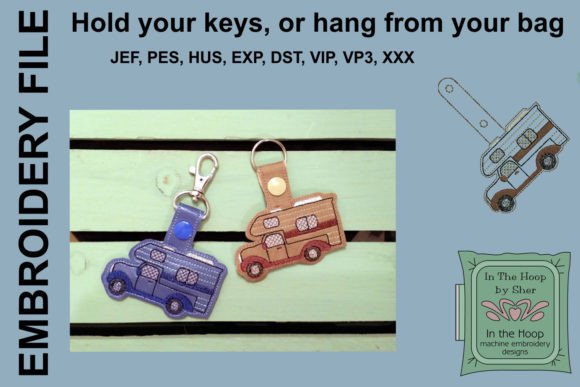
Truck and Camper Key Fob Design Review
As a designer who has spent years evaluating machine embroidery designs for both personal projects and commercial ventures, I approach every new file with a critical eye. The market is flooded with generic patterns, but finding a design that translates well from the screen to the finished product requires a keen understanding of stitch mechanics and visual balance. Recently, I evaluated the Truck and Camper Key Fob, an in-the-hoop project designed to celebrate the outdoor lifestyle. This review breaks down how this specific embroidery file performs in real-world scenarios, offering practical insights for craft business owners, Etsy sellers, and hobbyists looking to expand their portfolio.
First Impressions: Visual Personality and Layout
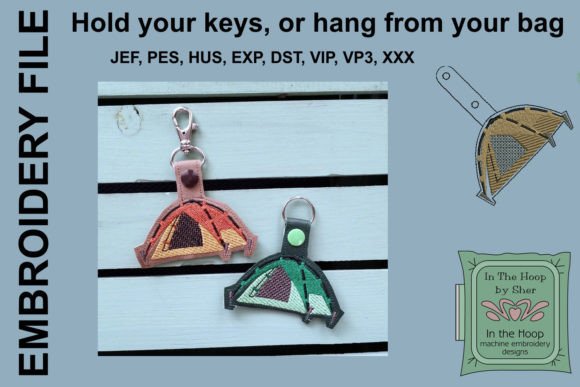
When I first loaded the preview of the Truck and Camper Key Fob, the immediate mood was one of rugged nostalgia. The layout is compact yet distinct, featuring the classic silhouette of a pickup truck towing a vintage camper. For a key fob application, space is at a premium, so the efficiency of the design is crucial. The lines are clean, avoiding unnecessary clutter that often plagues smaller scale projects. The visual weight is distributed evenly between the vehicle and the camper, ensuring neither element gets lost when stitched.
The design relies heavily on a mix of satin stitch for outlines and borders, paired with fill stitch for the body of the truck and camper. This combination is standard for durable accessories, but the execution here feels deliberate. The curves of the camper wheels and the roofline of the truck are smooth, suggesting a high-quality digitization process. Unlike some digital embroidery files that rely on jagged running stitches to save time, this design prioritizes clarity. For a small shop product or a personalized gift, this level of detail signals quality before the customer even touches the item.
Real-World Application: From Hoop to Finished Product
To truly understand the value of the Truck and Camper Key Fob, I imagined using it in a specific client scenario. Picture a local boutique preparing for the fall season. They need a line of holiday gifts that appeals to the outdoor enthusiast demographic. A simple printed tag won't cut it; they need something tactile and premium. This is where the in-the-hoop nature of the design shines.
In this scenario, the finished product would be a sturdy, felt-based key fob attached to a leather cord or a metal ring. Because the design is intended to be stitched directly into the hoop with instructions included, it minimizes the risk of shifting layers—a common issue with applique designs. The result is a cohesive unit where the stitching holds the fabric together while creating the image. For an Etsy seller, this reduces production time significantly compared to sewing separate patches onto a base.
I also considered how this design might translate to other items if the concept were adapted. While the file is optimized for a key fob, the core imagery could inspire custom apparel like a patch for a denim jacket or a small logo on a tote bag design. However, sticking to its intended use as a key fob ensures the best results. The density of the stitch density is perfect for the thickness required in a key fob, providing enough structure to hold its shape without becoming too stiff or heavy.
Navigating Challenges: Fabric and Hoop Considerations
While the Truck and Camper Key Fob is robust, experienced designers know that context matters. There are specific situations where this design requires careful handling. First, consider the hoop size. In-the-hoop projects demand precise alignment. If your machine's hoop is larger than the design footprint, you must ensure the stabilizer and fabric are taut enough to prevent puckering. A loose hoop can ruin the crisp edges of the camper wheels.
Fabric choice is another critical factor. This design works beautifully on medium-weight felt or non-woven interfacing, which are standard for key fobs. However, attempting to stitch this on very thin or stretchy fabric without proper support will lead to distortion. The thread colors selected should offer high contrast against the background fabric to maintain visibility. If you plan to use dark fabrics, verify that the fill stitch density is sufficient to cover the background completely; otherwise, the dark material might show through the lighter threads.
Additionally, while the design is durable, frequent washing is not recommended for delicate in-the-hoop items unless sealed properly. If you are selling these as part of a larger kit, include care instructions. For commercial embroidery purposes, consistency is key. Ensure that every batch uses the same stabilizer and thread tension settings to maintain brand consistency across all units.
Designer Notes for Professional Results
Before committing to a full production run or listing this as a digital product, there are several steps I recommend taking. Always test the Truck and Camper Key Fob on scrap fabric first. This allows you to check the thread consumption, adjust tension, and verify that no small details get lost in the stitching process. Inspect the corners of the camper and the tires specifically, as these are areas where satin stitches can sometimes bunch up if the speed is too high.
For those creating printable mockups to showcase the design online, take photos of the actual stitched sample under natural light. Customers want to see the texture of the embroidered patch effect and the sheen of the thread. Avoid relying solely on computer-generated previews, as they rarely capture the depth of real machine embroidery.
Licensing is another vital consideration. If you intend to sell the physical key fobs, confirm that the license terms allow for commercial use of the finished goods. If you are a digital product seller looking to resell the file itself, ensure you have the appropriate rights. Many design assets are sold for personal use only, and violating these terms can harm your reputation and business standing.
Final Verdict on Value and Appeal
The Truck and Camper Key Fob stands out as a practical and visually appealing addition to any Camping themed collection. It bridges the gap between a simple souvenir and a high-quality handmade item. For the craft business owner, it offers a low-risk entry into the accessory market with a design that resonates with a passionate audience. The clarity of the stitching and the thoughtful layout make it a reliable asset for creating personalized gifts that feel special and durable.
Ultimately, the success of this project lies in the execution. By respecting the technical requirements of the embroidery project—from stabilizer selection to thread tension—you can produce a small shop product that commands attention. Whether you are making a few for friends or scaling up for a holiday sale, this design provides a solid foundation for professional-looking results. It proves that even small-scale Embroidery can deliver significant impact when the design is executed with care and precision.